
How Often Should You Repaint Your Home’s Exterior?
Repainting your home is a great way to maintain its appearance and protect it from the elements. After 20 years of painting homes throughout Hamilton, one of the most common questions we get is how often homeowners should tackle this project.
Well, there’s no magic number that applies to every house. The right timing depends on your siding material, how well the last paint job was done, and what kind of beating your home takes from New Jersey weather.
What to Expect Based on Your Siding
Most homes might need exterior repainting somewhere between five and ten years. But that’s just a ballpark figure. Some materials hold up longer, while others require frequent attention.
Aluminum siding generally lasts five to ten years before needing a fresh coat. Done right with good prep work and quality paint, it can stretch even further. Fading and a chalky film are your clues that it’s getting close to repaint time.
Wood siding usually needs repainting every three to seven years. Wood swells and shrinks with temperature swings and absorbs moisture more readily than other materials. This movement causes paint to crack and peel over time. If you have wood siding, keeping an eye on it matters more than sticking to a rigid schedule.
Stucco holds paint pretty well and often goes five to ten years or longer, depending on how much sun and rain it gets. Since stucco is porous, sealing it properly makes a big difference in how long the finish lasts.
Painted brick can go ten to fifteen years between coats. Brick itself is tough, but once you paint it, you’re committing to maintenance to keep that protective layer doing its job.
Weather Takes a Bigger Toll Than Most People Realize
New Jersey weather is hard on paint. Blazing summer sun fades colors and breaks down the paint film. Humid summers and wet springs create conditions for blistering, mold, and peeling when the paint starts losing its grip.
Your exterior paint works around the clock to shield what’s underneath. Winter brings freeze-thaw cycles. Spring dumps rain on everything. Summer cranks up the heat and humidity. Fall swings between warm and cold. Year after year, this wears paint down.
Why the Last Paint Job Matters
How well your house was painted before has as much impact as when it was painted. Thorough prep work, real cleaning, proper repairs, all of that affects longevity. Premium primers and exterior paints stand up to the weather way better than budget products.
We get it. When you’re looking at estimates, a lower number catches your eye. But rushed prep or cheap materials mean you’ll be back at this sooner than you’d like. That’s why we walk people through what goes into the work and why cutting corners usually backfires.
Signs Your Home Is Telling You Something
Forget the calendar for a minute. Your house will show you when it needs attention.
Watch for these red flags:
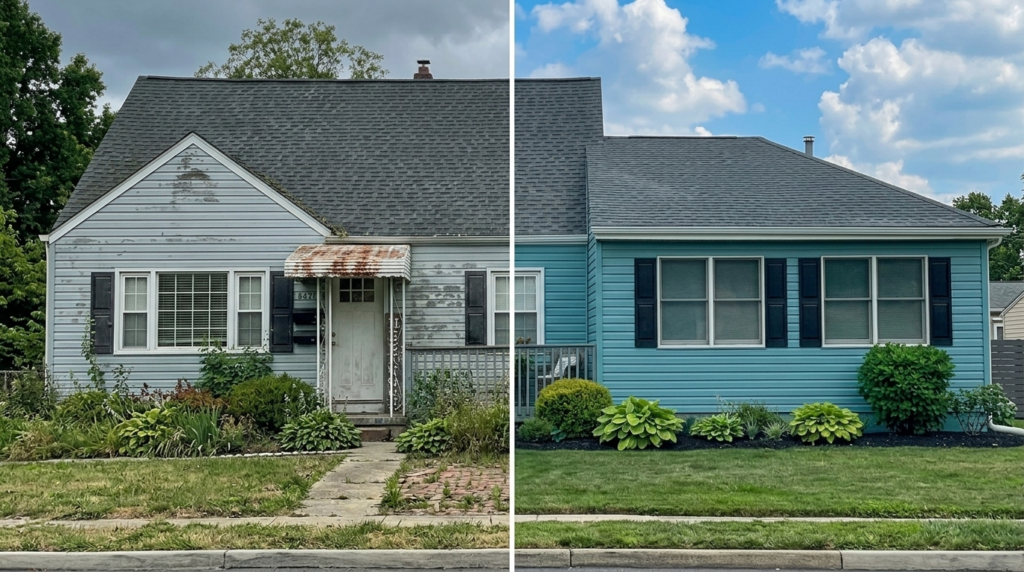
- Paint peeling, cracking, or bubbling where the protection is breaking down
- Colors looking dull and washed out
- Bare wood peeking through worn spots
- Caulk pulling away from windows, doors, or trim
- Chalky powder rubbing off when you touch the siding
- Mold or mildew that won’t stay gone, no matter how much you scrub
Catching these early stops water from sneaking behind your siding. A small peeling patch can turn into a much bigger mess once moisture gets in.
Stretching the Life of Your Paint
A little upkeep goes a long way toward making your paint job last.
Simple steps that buy you extra years:
- Wash your siding every year or two to clear off grime and mildew
- Fix small cracks and damage before they spread
- Keep your gutters clean, so water flows away from the house
- Check window and door caulking once a year
- Deal with any mold spots right away
These aren’t complicated tasks, but they really do add time before you need to repaint.
It’s About More Than Looks
Sure, fresh paint makes your house look sharp. But it’s also your home’s first line of defense against sun, wind, rain, and temperature swings. When paint fails, moisture finds its way in. That leads to rot, mold, and repair bills that dwarf the cost of repainting.
We’ve walked properties where waiting too long turned a standard paint job into a full-blown repair project. Rotted trim, damaged siding, problems that could’ve been avoided. Staying ahead of it protects what you’ve invested in your home.
When You’re Not Sure, Act
If you’re on the fence about whether it’s time, we can come take a look. We’ll walk your property, check the condition of your siding, spot any trouble brewing underneath, and give you straight talk about what makes sense. Sometimes a few touch-ups will hold you over. Other times, a complete repaint is the smarter move.
People often ask if they can squeeze out one more year. It depends on what we find. If your paint is still doing its job, waiting might be fine. But if we see moisture creeping in, putting it off usually costs more later.
Finding the Right Timing
What works for your neighbor’s house might not match what yours needs. General guidelines help, but watching how your paint performs matters more than following a set timeline.
Got questions about where your home stands? We’re happy to swing by and give you an honest read on things. Want to set up a time? Give us a call, and we’ll get something on the calendar.